
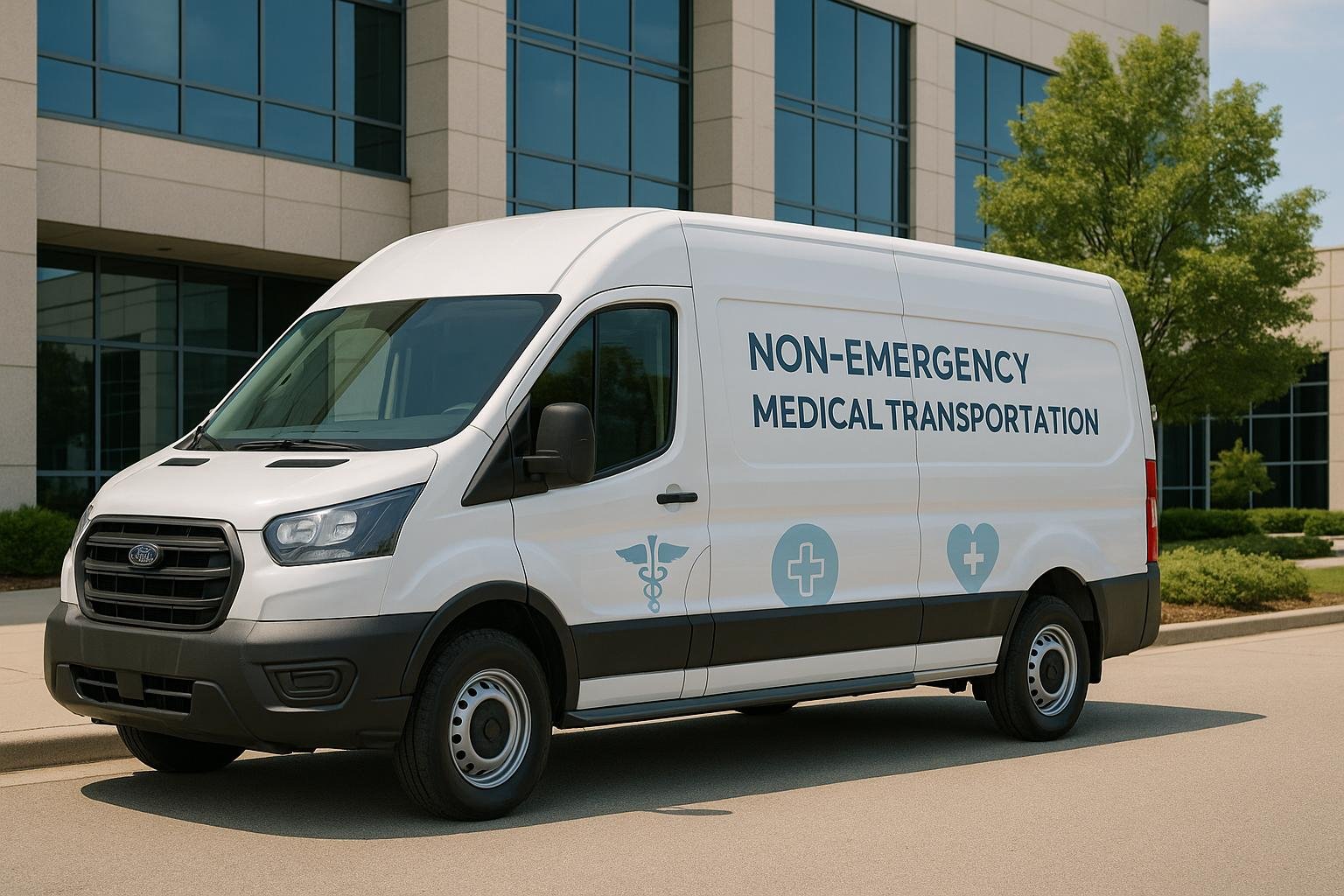
Non-emergency medical transportation (NEMT) is becoming an increasingly important component of healthcare access in the United States. As the population ages, healthcare delivery evolves, and government agencies strengthen program oversight, transportation providers face new opportunities and operational challenges.
Looking ahead to 2027, the NEMT industry is likely to experience changes in technology adoption, regulatory compliance, patient transportation needs, and service management.
Federal guidance from the Centers for Medicare & Medicaid Services (CMS), demographic projections from the Congressional Budget Office (CBO), and recent oversight initiatives provide valuable insight into the industry’s direction.
Here are seven developments that could shape non-emergency medical transportation in 2027.
1. An Aging Population Could Increase Transportation Needs
Demographic changes are among the most important long-term factors affecting medical transportation.
According to the Congressional Budget Office’s 2026 demographic outlook, the population aged 65 and older is projected to grow at an average annual rate of approximately 1.6% through 2036.
Older adults may experience mobility limitations or require assistance traveling to healthcare facilities.
As this population grows, demand for accessible transportation, wheelchair-equipped vehicles, and coordinated medical rides could increase.
However, demographic growth does not automatically translate into equivalent NEMT ridership growth. Transportation demand also depends on eligibility, healthcare utilization, insurance coverage, and the availability of other transportation options.
2. Medicaid Transportation Oversight Will Remain a Priority
Medicaid plays a central role in financing non-emergency medical transportation for eligible beneficiaries.
Federal requirements obligate state Medicaid programs to ensure necessary transportation to and from covered healthcare services.
In May 2026, the U.S. Department of Health and Human Services Office of Inspector General (HHS-OIG) announced audits examining whether selected states comply with Medicaid payment requirements for NEMT.
Another federal oversight project focuses on identifying suspicious billing patterns and potential improper payments.
These initiatives suggest that transportation documentation and billing accuracy will remain important industry concerns in 2027.
Providers may face greater scrutiny of trip records, driver qualifications, service authorization, and reimbursement claims.
3. Artificial Intelligence Could Improve NEMT Scheduling
Artificial intelligence is becoming increasingly relevant to transportation logistics.
In 2027, NEMT companies may expand their use of automated scheduling, route optimization, and predictive dispatch systems.
Potential applications include:
- Forecasting transportation demand.
- Identifying scheduling conflicts.
- Optimizing vehicle assignments.
- Predicting delays using traffic information.
- Monitoring unusual trip patterns.
- Improving communication between dispatchers and drivers.
These technologies could help transportation brokers manage larger networks and improve operational efficiency.
However, AI-based dispatching is not a universal industry standard, and the effectiveness of individual systems will depend on implementation, data quality, and human oversight.
4. Wheelchair-Accessible Transportation May Become More Important
Accessible vehicles remain essential for passengers who cannot safely travel in conventional cars.
NEMT providers serve individuals with different mobility requirements, including passengers using wheelchairs, walkers, and other mobility equipment.
In 2027, healthcare organizations and transportation brokers may place additional emphasis on maintaining sufficient accessible vehicle capacity.
Vehicle availability, driver training, appropriate passenger assistance, and accessibility equipment maintenance will remain important considerations.
Companies offering specialized transportation may find opportunities in markets where suitable vehicles are limited.
At the same time, operating accessible fleets can involve higher equipment, maintenance, and training costs.
5. Medical Transportation Will Become More Connected to Healthcare Coordination
Transportation is often one of several services that patients need to successfully attend healthcare appointments.
Missed or delayed rides can disrupt treatment schedules and create additional administrative work for medical facilities.
CMS guidance recognizes the importance of transportation access, including situations involving long-distance travel and extended waiting times.
In 2027, healthcare organizations may seek closer coordination between appointment scheduling and transportation arrangements.
Potential improvements include automated trip notifications, better communication with healthcare facilities, and more accurate return-trip planning.
These developments could help reduce scheduling difficulties, although their actual impact will vary across healthcare systems.
6. Digital Trip Verification Could Gain Importance
Accurate transportation records are essential for Medicaid billing, operational oversight, and provider accountability.
As federal and state agencies continue examining transportation claims, electronic documentation may become increasingly valuable.
Digital trip verification can include GPS coordinates, timestamps, driver identification, vehicle information, and electronic confirmation of completed journeys.
These tools can help organizations identify discrepancies and maintain more consistent records.
In 2027, transportation companies may invest further in systems that connect dispatch activity with trip documentation and reimbursement processes.
Digital verification does not eliminate compliance risks, but it can support more effective recordkeeping when properly implemented.
7. Operational Efficiency Could Become a Competitive Advantage
NEMT providers must balance transportation costs with service reliability and passenger accessibility.
Fuel expenses, insurance premiums, vehicle maintenance, staffing, and scheduling complexity all influence operating costs.
As demand and oversight evolve, organizations may increasingly evaluate transportation partners based on measurable operational capabilities.
Important performance indicators may include:
- On-time pickup rates.
- Trip completion rates.
- Passenger complaints.
- Vehicle utilization.
- Documentation accuracy.
- Driver and vehicle compliance.
Transportation companies that combine appropriate vehicles, trained personnel, reliable service, and effective technology may be better positioned to compete for contracts.
Frequently Asked Questions About NEMT in 2027
Will NEMT demand grow in 2027?
Demand could increase in some markets because of population aging, mobility needs, and healthcare transportation requirements. However, there is no single verified nationwide NEMT trip-volume forecast for 2027.
Will Medicaid continue covering NEMT in 2027?
Federal law requires states to assure necessary transportation for eligible Medicaid beneficiaries. Specific eligibility conditions and transportation arrangements depend on applicable program rules.
How will AI affect medical transportation?
AI may help transportation companies optimize routes, forecast demand, identify scheduling conflicts, and monitor operations. Adoption and results will vary among providers.
Will NEMT regulations become stricter?
Federal oversight activity announced in 2025 and 2026 suggests continued attention to billing accuracy and program compliance. New nationwide requirements for 2027 should not be assumed without official regulatory announcements.
What will matter most for NEMT providers in 2027?
Transportation reliability, accessibility, regulatory compliance, accurate documentation, and operational efficiency are likely to remain major priorities.
Conclusion: What to Expect From NEMT in 2027
The outlook for non-emergency medical transportation in 2027 points toward a more technology-driven and closely monitored industry.
Population aging may create additional transportation needs, while government oversight could increase the importance of accurate documentation and responsible billing.
Artificial intelligence, digital dispatch platforms, and integrated transportation management systems offer opportunities to improve efficiency.
At the same time, reliable vehicles, qualified drivers, accessibility, and passenger-centered service will remain fundamental.
For transportation providers, brokers, and healthcare organizations, 2027 could be an important year for improving operational standards and preparing for the future of medical transportation in the United States.
