
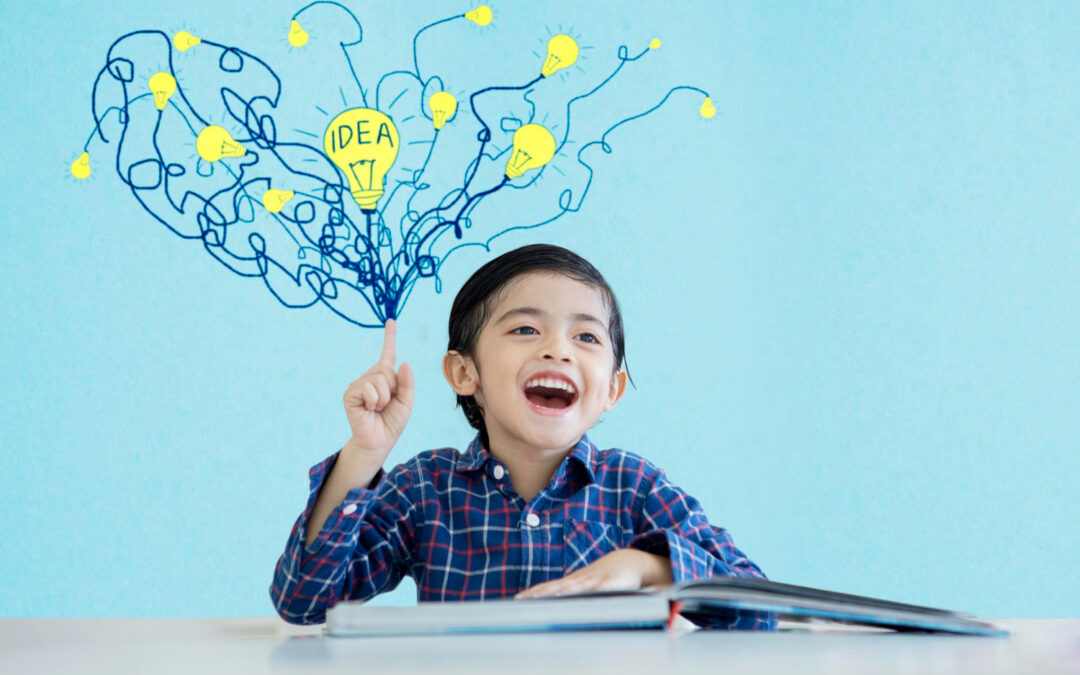
The global educational landscape is undergoing a massive transformation, driven by rapid technological advancements and changing societal demands. Today, traditional schooling methods often struggle to keep pace with the cognitive skills required for success in the modern workforce. Parents and educators are increasingly recognizing that academic achievement is no longer just about memorizing facts or repetitive testing. Instead, the focus has shifted toward building a flexible, resilient, and highly adaptable intellect capable of critical thinking, fast data processing, and creative problem-solving. To achieve this, specialized out-of-school programs have emerged as a powerful tool for holistic cognitive growth.
Many forward-thinking families turn to professional networks like Amakids to provide their children with structured, scientifically backed mental exercises. These programs do not simply teach specific school subjects; rather, they serve as a high-performance gym for the brain, systematically strengthening neural pathways and balancing the activity of both hemispheres from an early age. Investing in this type of intellectual scaffolding during a child’s formative years ensures that they develop the core cognitive competencies necessary to navigate an increasingly complex and automated world with confidence and ease.
The Cognitive Architecture of Bilateral Brain Stimulation
The human brain is a marvel of biological engineering, split into two distinct yet deeply interconnected hemispheres, each responsible for unique cognitive tasks. The left hemisphere is traditionally associated with analytical thought, logic, language, and mathematical sequencing. In contrast, the right hemisphere governs spatial awareness, emotional intelligence, artistic expression, imagination, and holistic visualization. Traditional educational systems frequently place an overwhelming emphasis on left-brain activities, which can sometimes leave a child’s creative and intuitive potential underutilized.
Advanced intellectual training centers correct this imbalance by designing curricula that require the simultaneous activation of both hemispheres. When a child engages in exercises that blend logical calculation with vivid mental visualization, the corpus callosum—the dense bundle of nerve fibers connecting the two halves of the brain—is significantly strengthened. This bilateral stimulation accelerates the speed of information transfer between hemispheres, leading to a profound improvement in cognitive agility. As a result, children learn to approach complex challenges from multiple angles, combining strict logical analysis with innovative, out-of-the-box creative problem-solving.
Essential Programs Shaping Executive Function and Academic Excellence
To systematically enhance a child’s mental capabilities, specialized academies utilize a suite of proprietary methodologies, each targeting specific domains of executive function. These programs are structured to grow with the child, transforming abstract cognitive exercises into practical tools that elevate their performance across all areas of life, from standard school subjects to competitive sports and creative arts.
The most effective methodologies utilized in modern cognitive training include:
- Mental Arithmetic: This foundational course utilizes the ancient abacus as a bridge to advanced mental calculation. Children initially learn to manipulate physical beads, which sharpens tactile memory and fine motor skills. Gradually, the physical tool is replaced by a mental image of the abacus, allowing students to perform complex arithmetic operations in their minds within seconds, vastly improving focus and visualization.
- Speed Reading: Designed to combat the modern challenge of information overload, this program trains the eyes and brain to process large blocks of text simultaneously. Rather than reading word-by-word subvocally, children learn to capture entire sentences or paragraphs at a glance, dramatically increasing reading speed while maintaining exceptionally high levels of comprehension and contextual analysis.
- Memory Development: This curriculum introduces children to mnemonic techniques, memory palaces, and structured association tools. By learning how to categorize, store, and retrieve information efficiently, students find it much easier to master foreign languages, remember historical timelines, and grasp intricate scientific concepts without relying on stressful, short-term cramming.
Building Emotional Intelligence and Long-Term Lifeskills
While the measurable metrics of intellectual training—such as calculating speed or reading velocity—are undeniably impressive, the psychological and emotional benefits are equally profound. Success in the modern world requires a high degree of emotional intelligence, self-regulation, and unwavering self-confidence. When a child masters a difficult cognitive skill, such as computing a complex equation entirely in their head, their internal perception of their own capability undergoes a radical shift. This boost in self-efficacy translates into a willingness to tackle hard problems rather than avoiding them out of a fear of failure.
Furthermore, these specialized classes are typically conducted in small, interactive groups that foster healthy peer socialization and collaboration. Children learn to communicate their thoughts clearly, appreciate different problem-solving styles, and manage healthy competition. The gamified nature of modern educational platforms ensures that learning is viewed not as a tedious chore, but as an exciting, rewarding pursuit, instilling a genuine love for lifelong learning that persists well into adulthood.
Navigating Digital Landscapes via Gamified Learning
Modern children are digital natives, completely immersed in technology from their earliest years. Rather than fighting this reality, progressive intellectual academies integrate cutting-edge software and gamified digital platforms directly into their learning models. By turning rigorous brain training into an immersive, interactive experience filled with achievements, story arcs, and instant feedback, educators can capture and sustain a child’s attention far more effectively than traditional textbooks ever could. This strategic use of technology transforms screen time from a passive, mind-numbing activity into an active, cognitively enriching experience that actively sharpens focus, spatial reasoning, and hand-eye coordination.
A Strategic Framework for Selecting the Right Educational Partner
As the market for supplementary education grows, parents must be discerning when choosing a provider to guide their child’s intellectual development. A high-quality program should offer a clear, transparent framework for tracking progress and ensuring long-term success.
When evaluating a cognitive training academy, families should look for the following criteria:
- Certified Professional Instructors: Teachers must be specifically trained in child psychology and specialized cognitive methodologies, ensuring they can adapt lessons to individual learning paces.
- Proprietary Multi-Level Curriculum: The courses should feature a clear, structured progression that gradually increases in difficulty to match the child’s expanding mental capacity.
- Advanced Interactive Ecosystem: Access to a reliable, engaging online platform allows for consistent, targeted practice at home between weekly in-person sessions.
- International Quality Standards: Programs that are recognized globally offer a curriculum that has been refined through feedback from diverse educational environments.
Ultimately, providing a child with professional intellectual training is one of the most transformative gifts a parent can offer. By developing a sharp memory, rapid reading comprehension, and an agile, dual-hemisphere approach to problem-solving, children gain a massive competitive advantage that extends far beyond the classroom walls. These skills form the bedrock of sustainable future success, enabling the next generation to step forward into the global economy not merely as passive consumers of technology, but as innovative thinkers, visionary leaders, and confident problem-solvers capable of turning any future challenge into an opportunity for growth.
